
- Client
- Health Bridge
- Sector
- Healthcare · practice management
- Origin's role
- Research, experience design, wireframes & prototyping, UI design, development partner collaboration
- Workshop facilitation
- Field research
- Wireframes & prototypes
- User experience design
- User interface design
- Tablet design
The challenge
Health Bridge is a South African medical practice management and billing software company. It provides clinical software, in-house and outsourced billing, and real-time claims submission to medical schemes, and it serves close to 7,000 private practices, from general practitioners and specialists to dentists and optometrists.
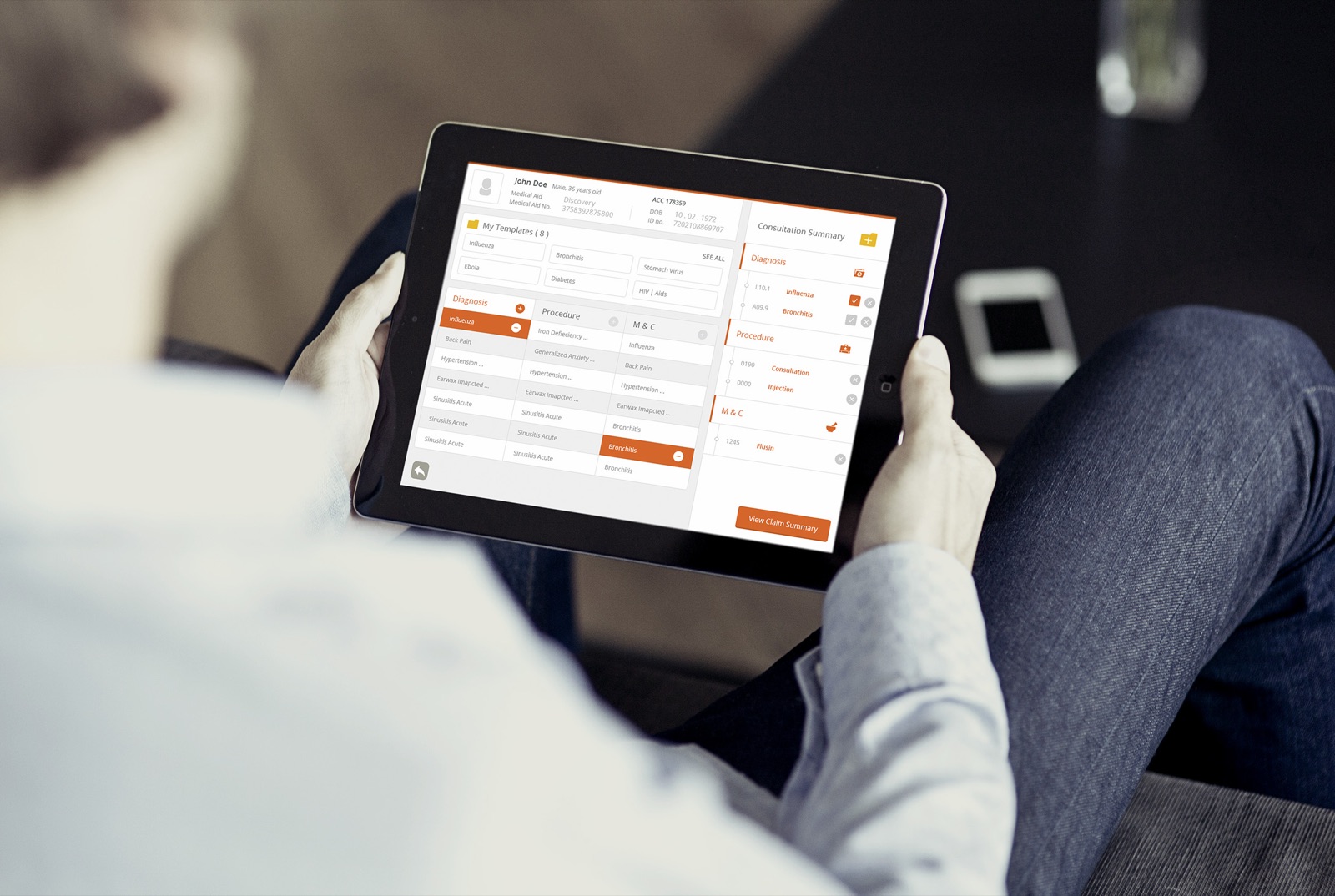
Many of the smallest practices still ran on paper. Patient details were written on forms, consultation notes were handwritten, and every claim had to be captured again before it could go to a medical aid. Health Bridge asked Origin to help design a mobile tablet solution for these practices, one that would digitise the practice itself, not only the paperwork around it.
The real problem
On paper, the brief looked like a records problem: get the patient file out of the filing cabinet and onto a screen. Sitting in real practices told us otherwise. The paper trail was a chain of hand-offs. A receptionist captured the patient's details, the doctor wrote up the consultation, and someone later turned all of it into a claim. Each hand-off was a chance to lose time or make a mistake, and none of it was patient care.
The sharper problem was that a practice needed one continuous record, from the moment a patient walks in to the moment the claim is submitted, in a tool that a receptionist and a doctor could both use without training or patience for technology.
Our approach & thinking
We began with a series of workshops with the Health Bridge team, then went into working healthcare practices to see the current process first hand. We interviewed receptionists and doctors about how their days actually ran and where the paper slowed them down. Their pain points became the brief.
Before any visual design or development started, we produced wireframes and prototypes to settle the flow. The full experience was designed through a human-centred approach, and only then were the tablet interface designs built on top of it.
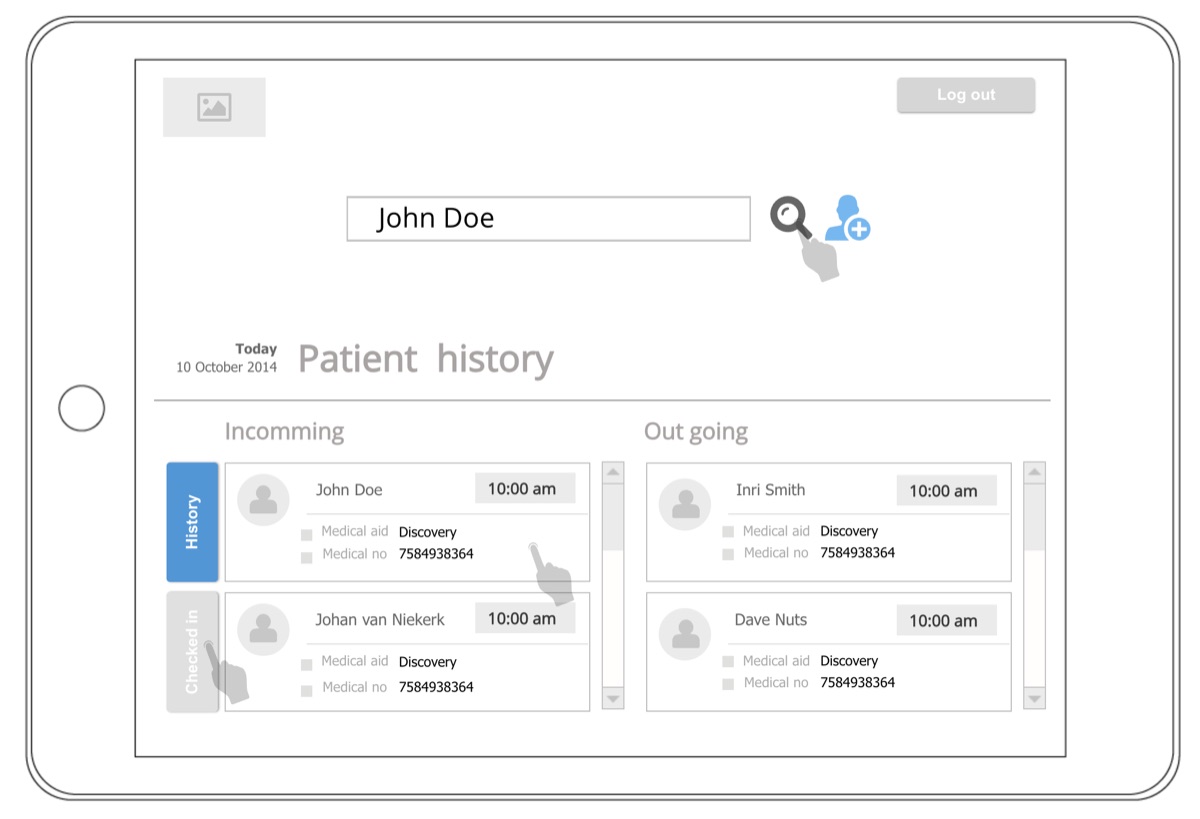
Anyone in the practice can add a patient: capturing a patient's details had to be simple enough for a receptionist in the middle of a busy morning, so it became one search and one form.
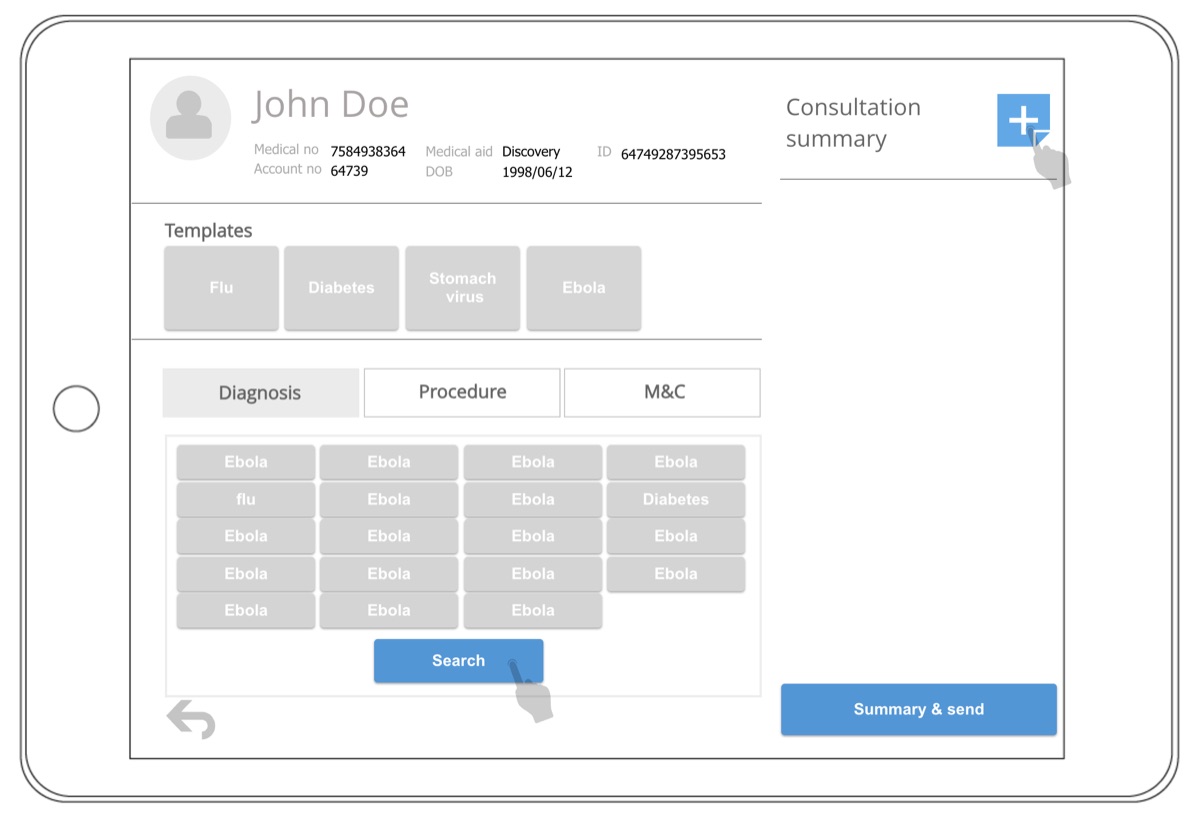
Templates for the doctor: instead of building every consultation from scratch, doctors pick from templates of the diagnoses, procedures and medicines they use most, and make their own.
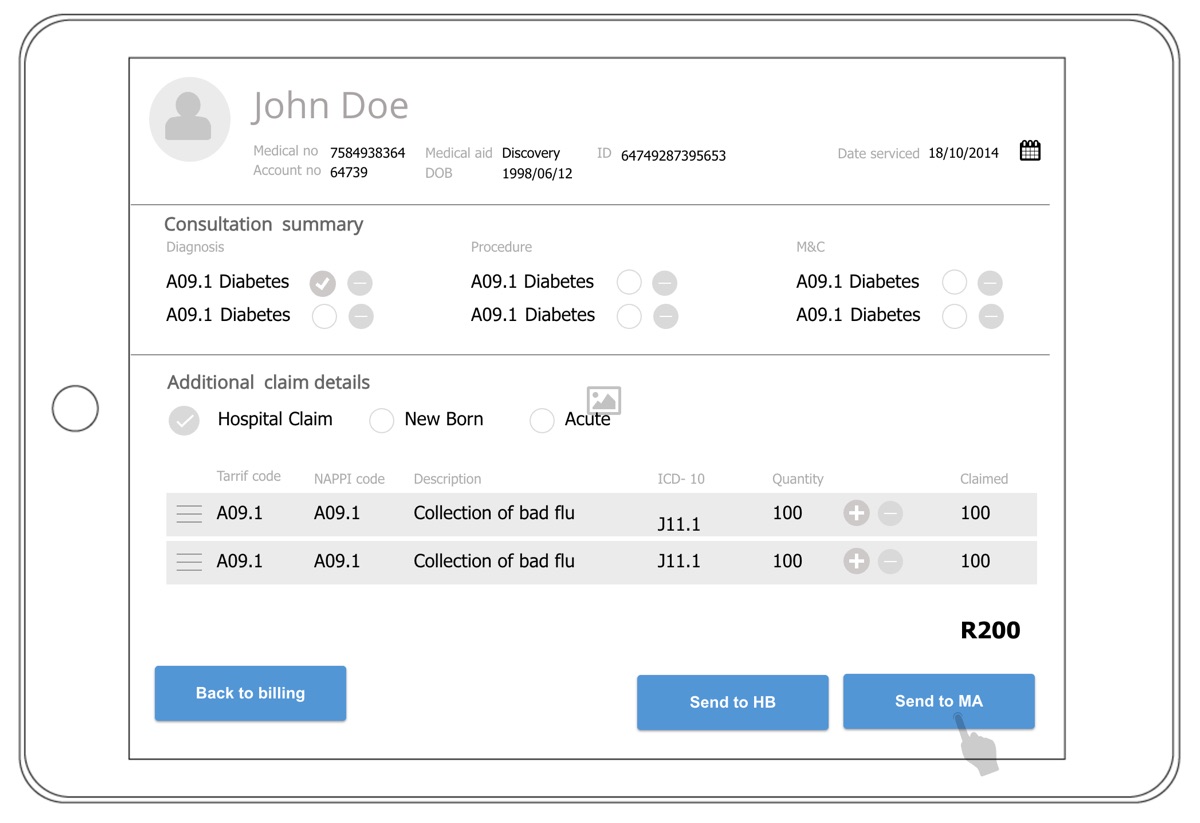
The claim is a by-product of the consultation: everything the doctor records flows into the billing summary, and from there straight to the medical aid or to Health Bridge, so nothing is captured twice.
We then worked closely with a development partner to turn the designs into working software.
What we shipped
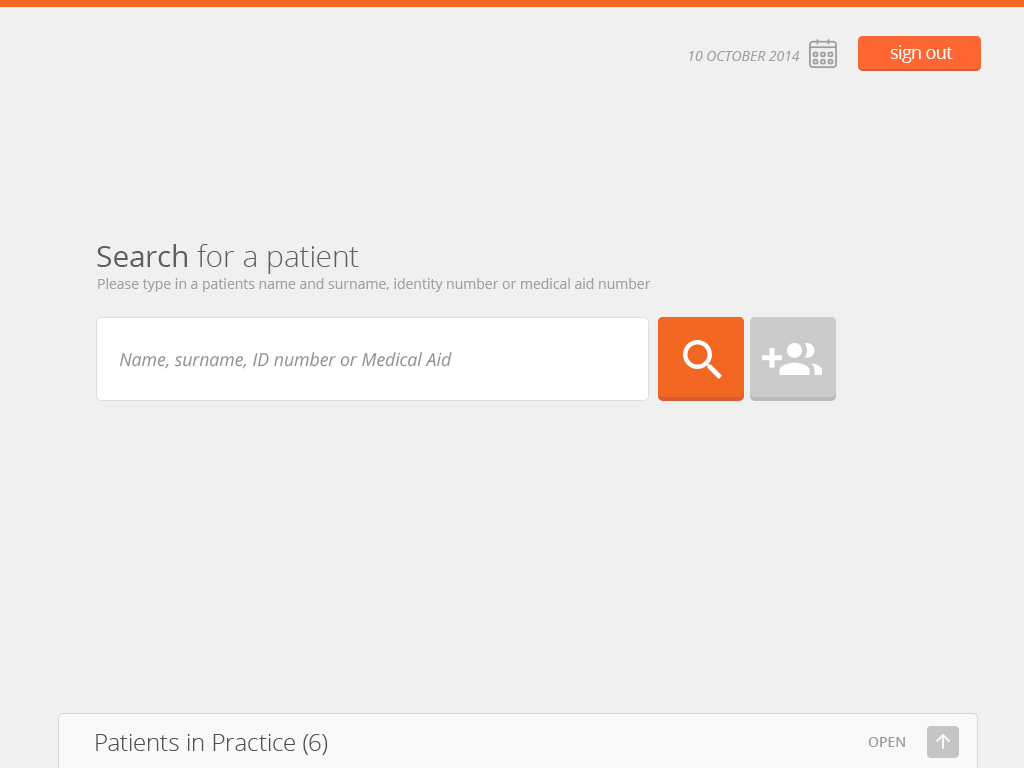
The result is a tablet solution that follows a patient through the practice. A receptionist searches for a patient by name, ID number or medical aid number, or adds a new one. The doctor opens the consultation, chooses a template or searches for a diagnosis by name or ICD 10 code, and adds the procedures and medicines. The consultation summary builds up alongside as they work.
The same information becomes the claim. A billing summary lists the codes, quantities and the total, and the practice submits it from the same screen, either to Health Bridge or directly to the medical aid, through the integration Health Bridge already has with the medical schemes. Billing sits inside the consultation, not after it.
Outcome & value
The solution is in the hands of healthcare professionals in practice, and the improvement shows in the day to day. Patient details are captured once and easy to find again. Consultations follow a familiar shape. Claims go out without being retyped. Receptionists and doctors spend less of the day on paperwork and on managing technology, and more of it on the patient in front of them.
For Health Bridge, it gave the smallest practices a way onto its platform that they could actually adopt. Had these practices stayed on paper, doctors would have kept losing time to forms and re-captured claims, and the practices with the least capacity to absorb that cost would have carried it the longest.
In summary

Next steps
Trying to get technology out of your people's way?
Let's talk about it.
Tell us what you're working on, what you're trying to achieve, what isn't working, or where you think there's an opportunity.