- Client
- McKinsey
- Project for
- Transnet Freight Rail
- Sector
- Rail · heavy-haul freight
- Origin's role
- Field research, UX, UI, product design
- Field research
- Operations tooling
- Data-capture app
- Shared status view
- Pilot delivery
The challenge
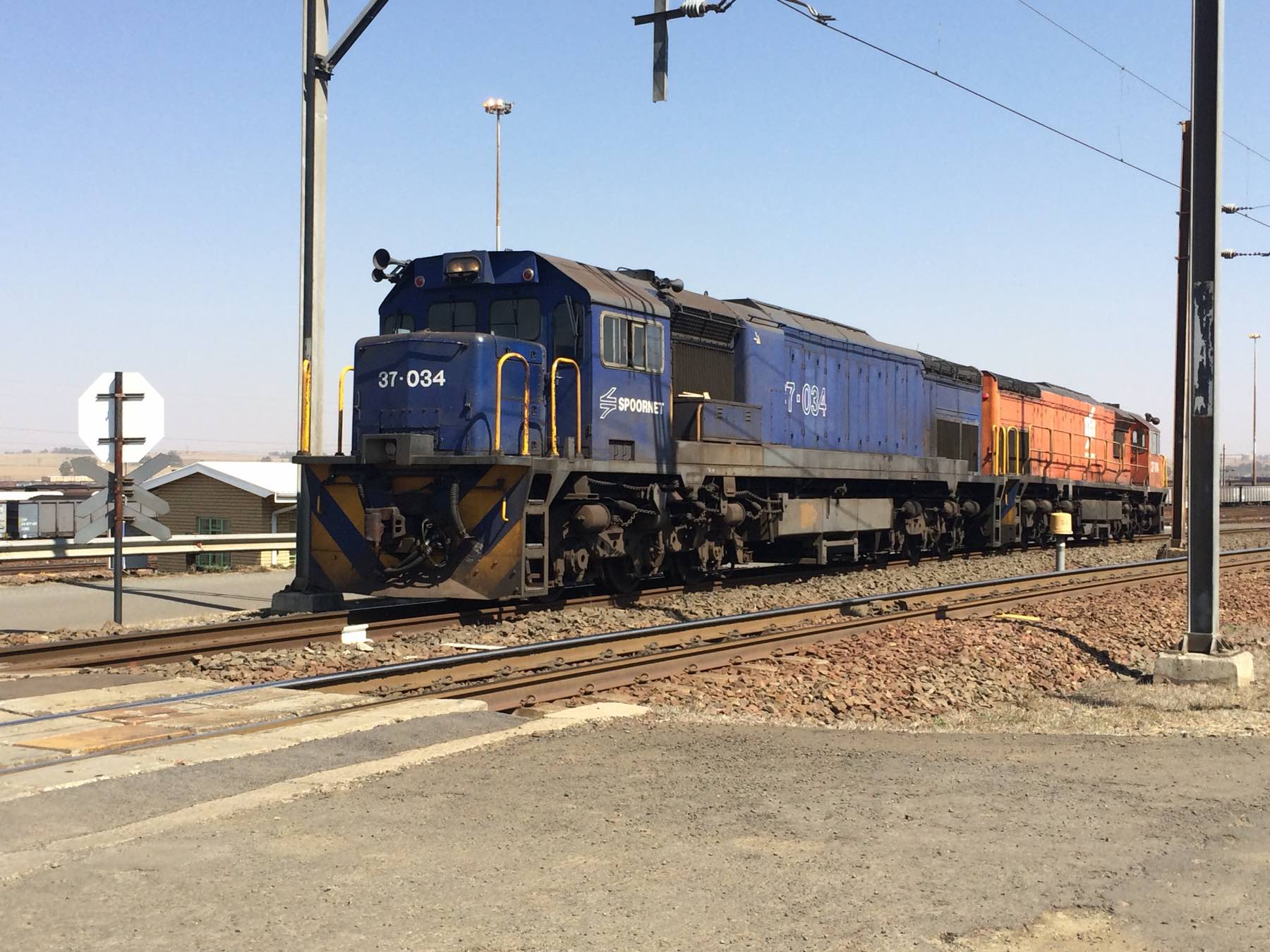
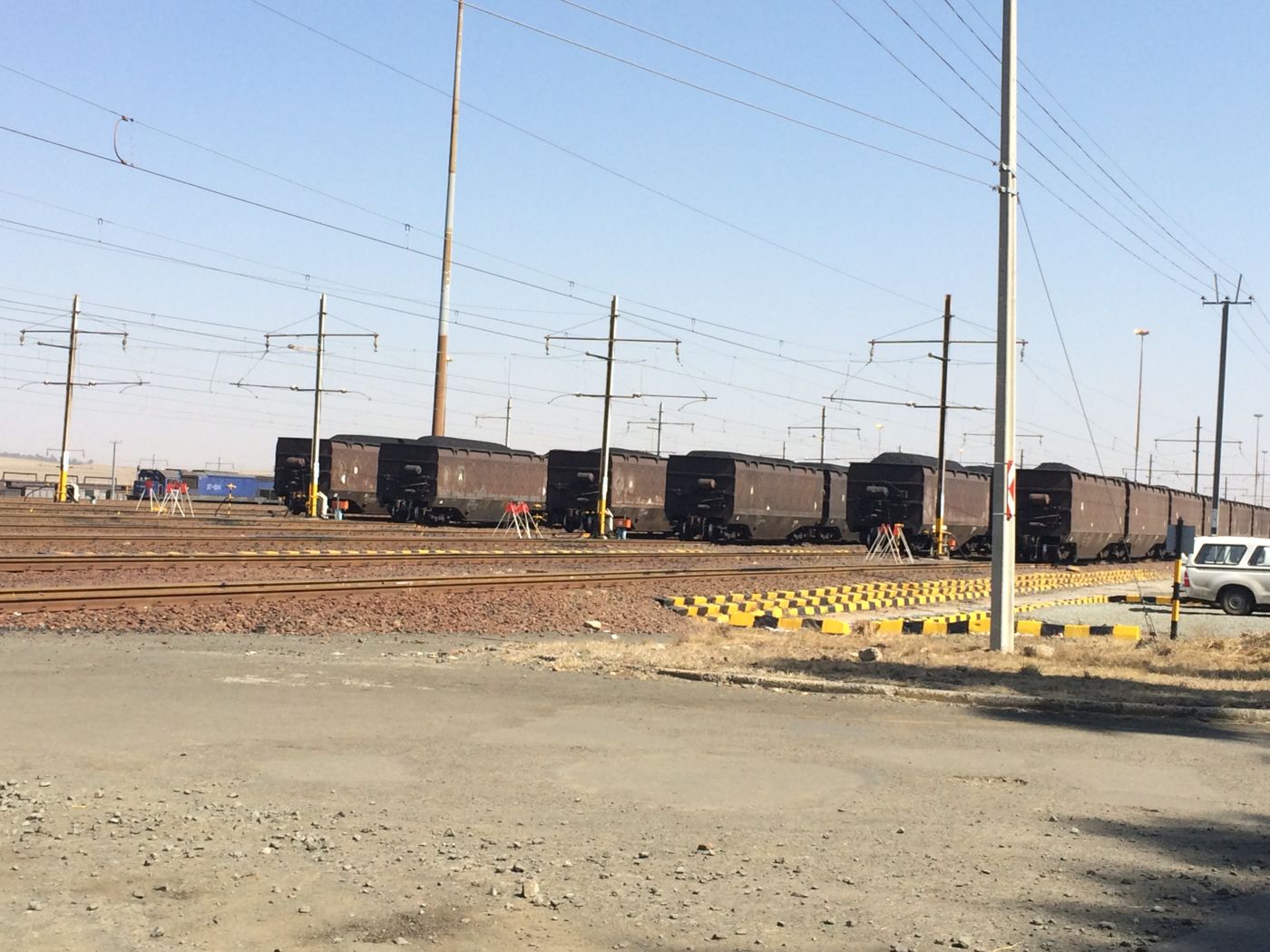
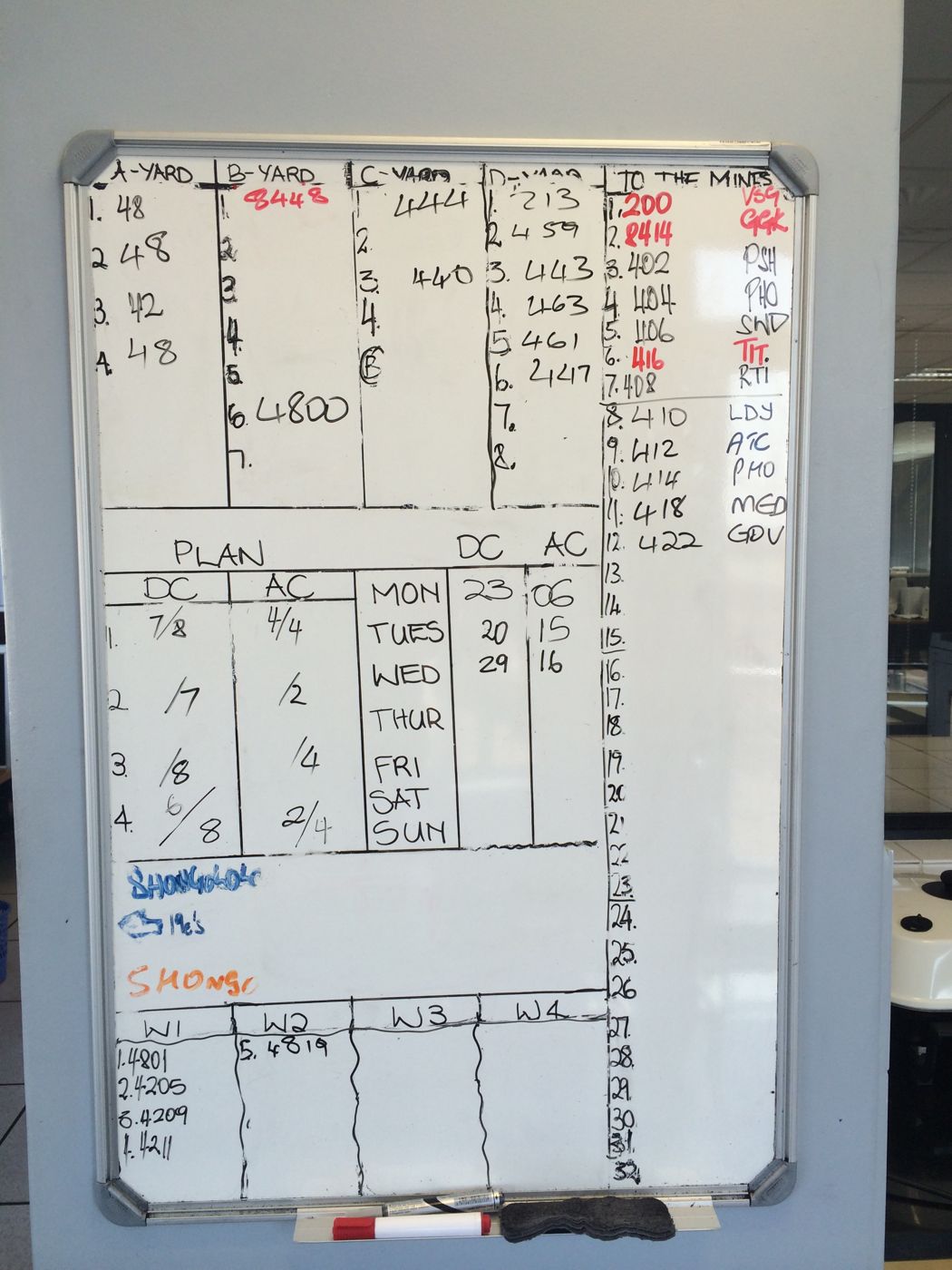
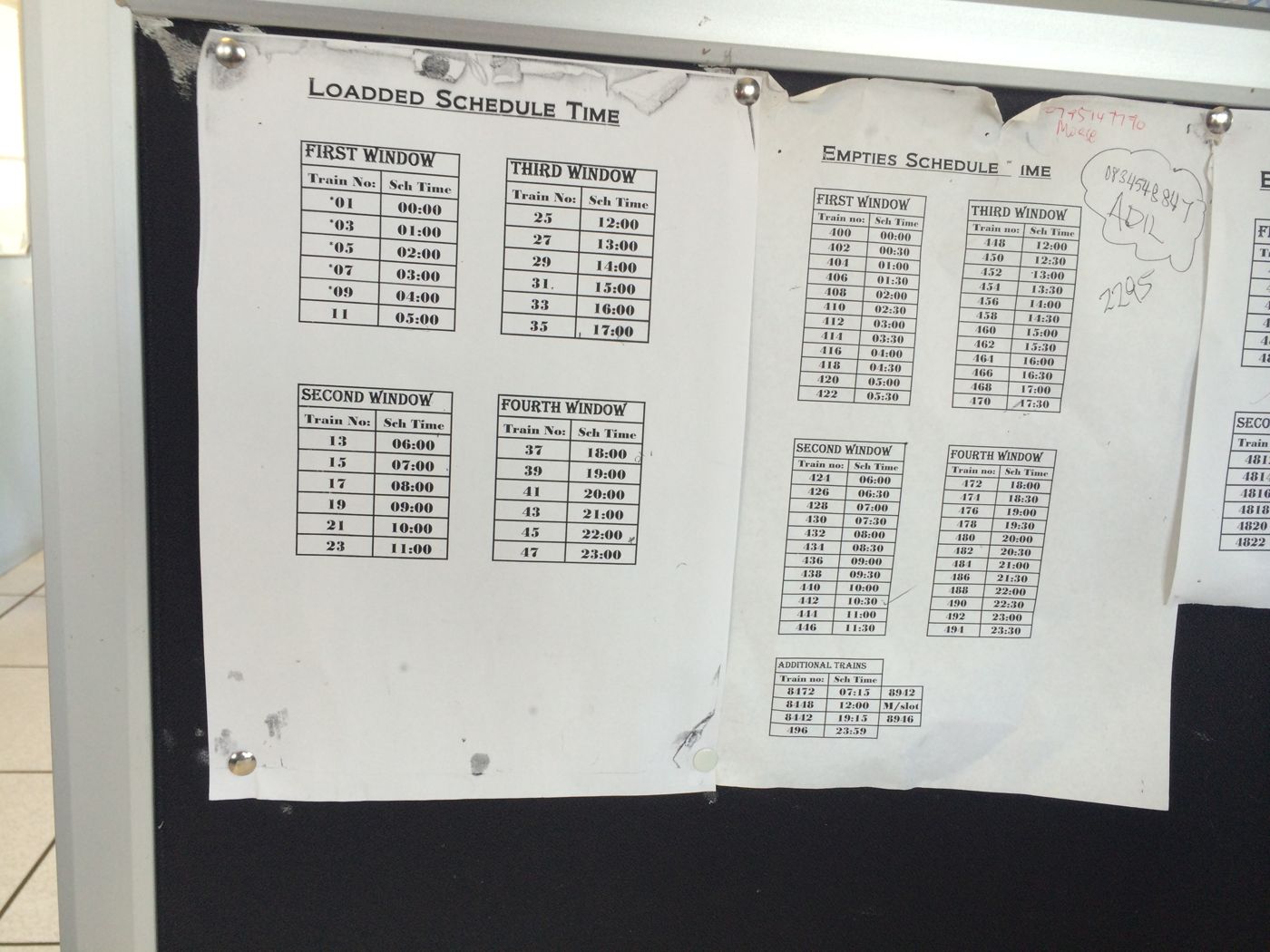
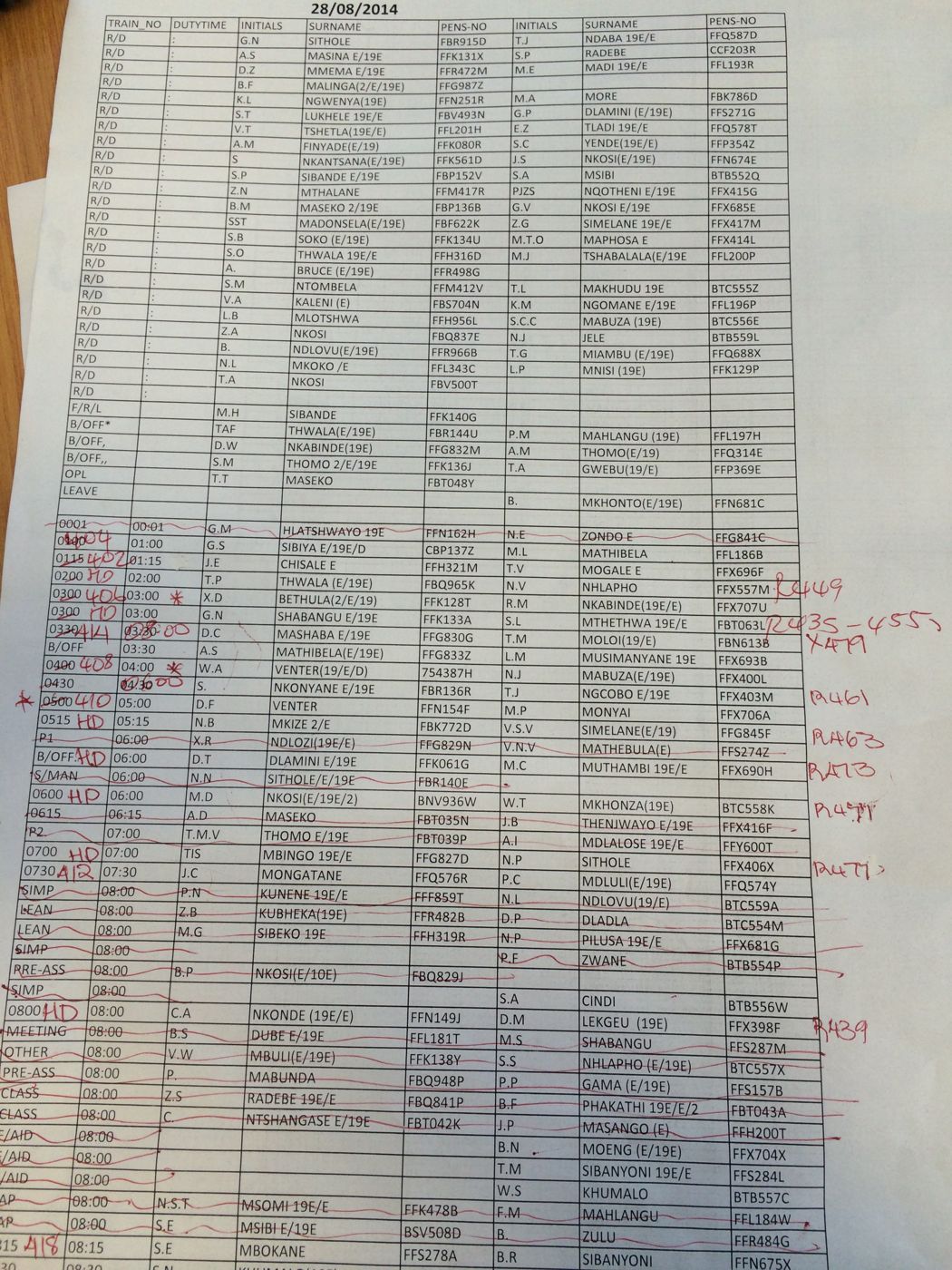
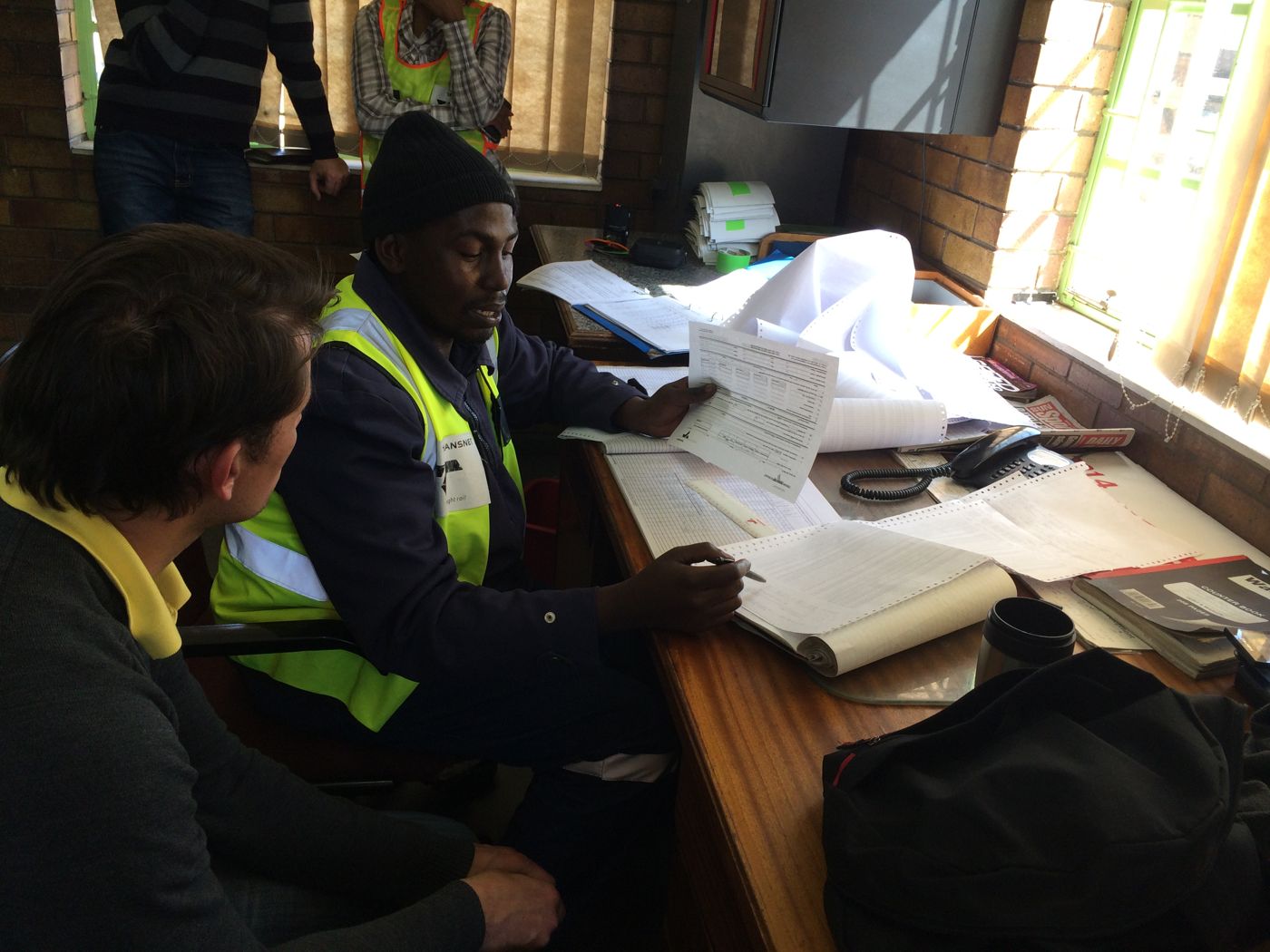
McKinsey engaged Origin to design an app for Transnet Freight Rail's Ermelo yard on South Africa's heavy-haul coal line, the route that moves coal from the Mpumalanga mines to the export terminal at Richards Bay. Loaded trains pass through a fixed sequence of control points in the yard: arrival, wagon examination, shunting, locomotive coupling, brake test, departure. Every one of those events was recorded by hand. A foreman wrote arrival times on a whiteboard, an examiner walked paperwork two hundred metres to the next control point, planners and control points coordinated by radio and phone. No one had a complete picture of the yard at any moment, and a delay at one point was often only discovered at the next.
The real problem was not a missing report. It was that the yard had no shared present tense. Each control point knew its own bit, the information moved at walking pace, and time that could have been used to prepare, calling a shunt locomotive, readying a short wagon set, was lost waiting for news to arrive.
Our approach & thinking
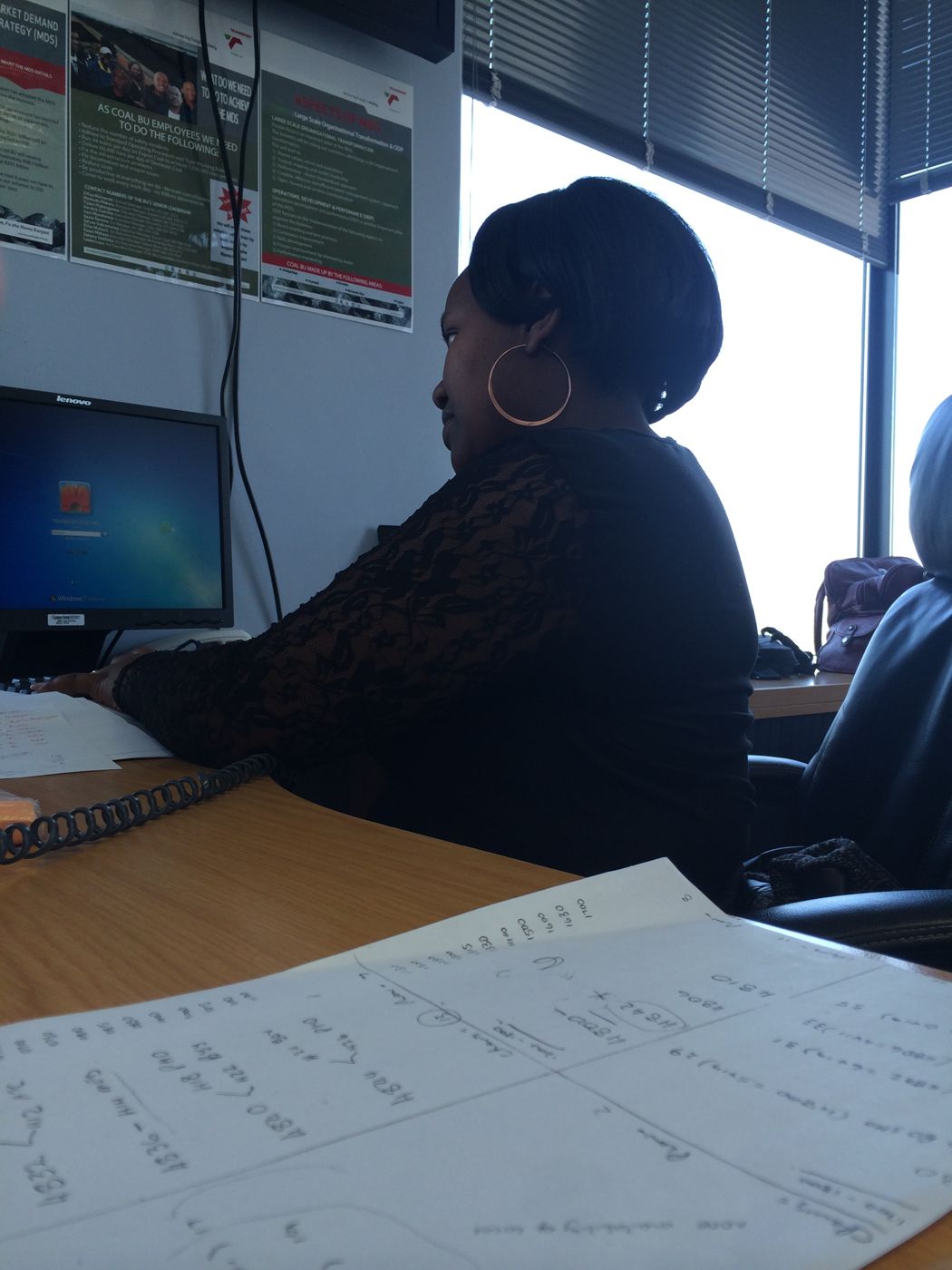
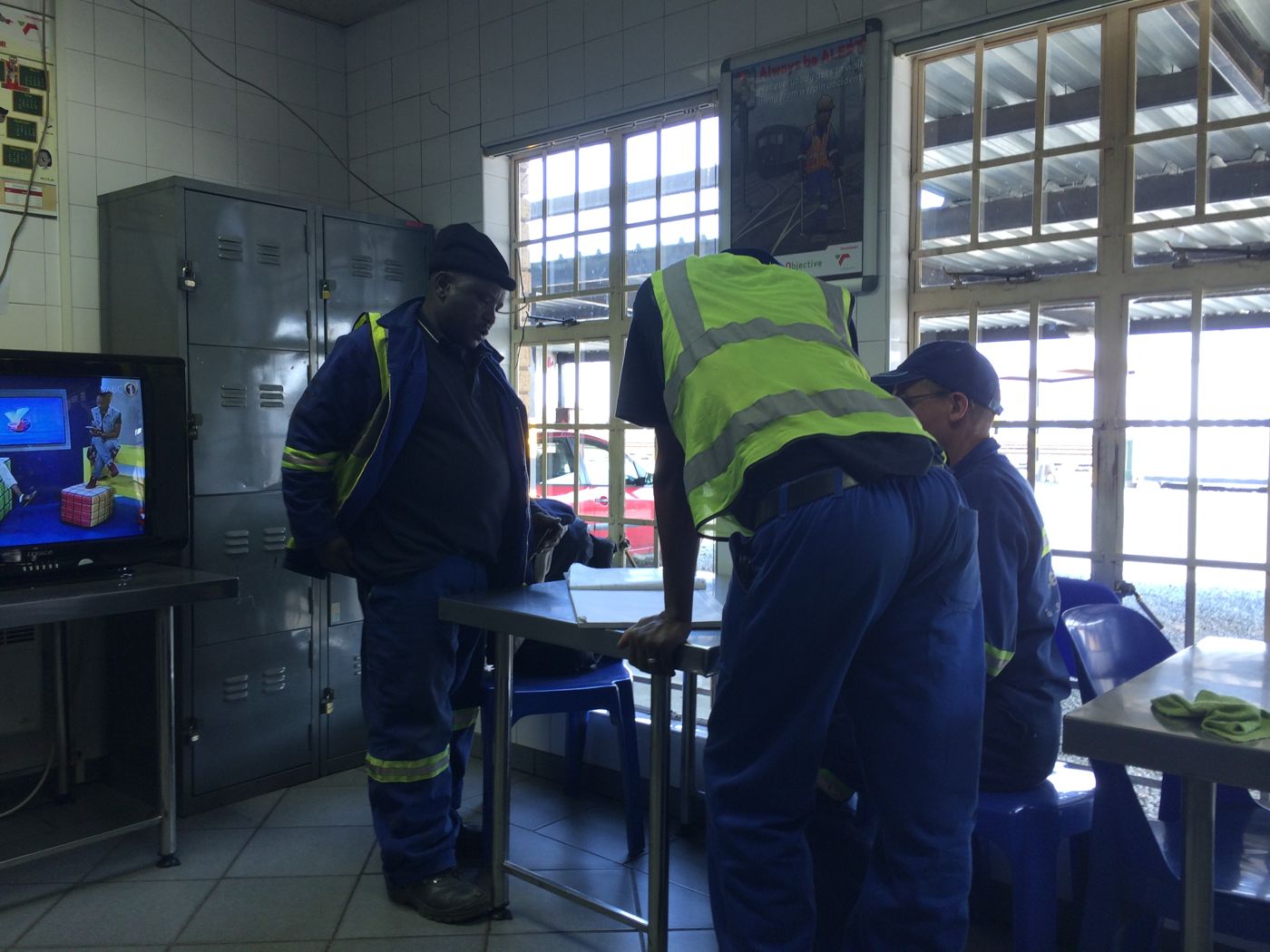
We began with research at the Ermelo depot. Origin walked the loaded cycle from arrival to departure, sat with control-point foremen, wagon examiners and the planning manager, and watched how information actually moved between them.
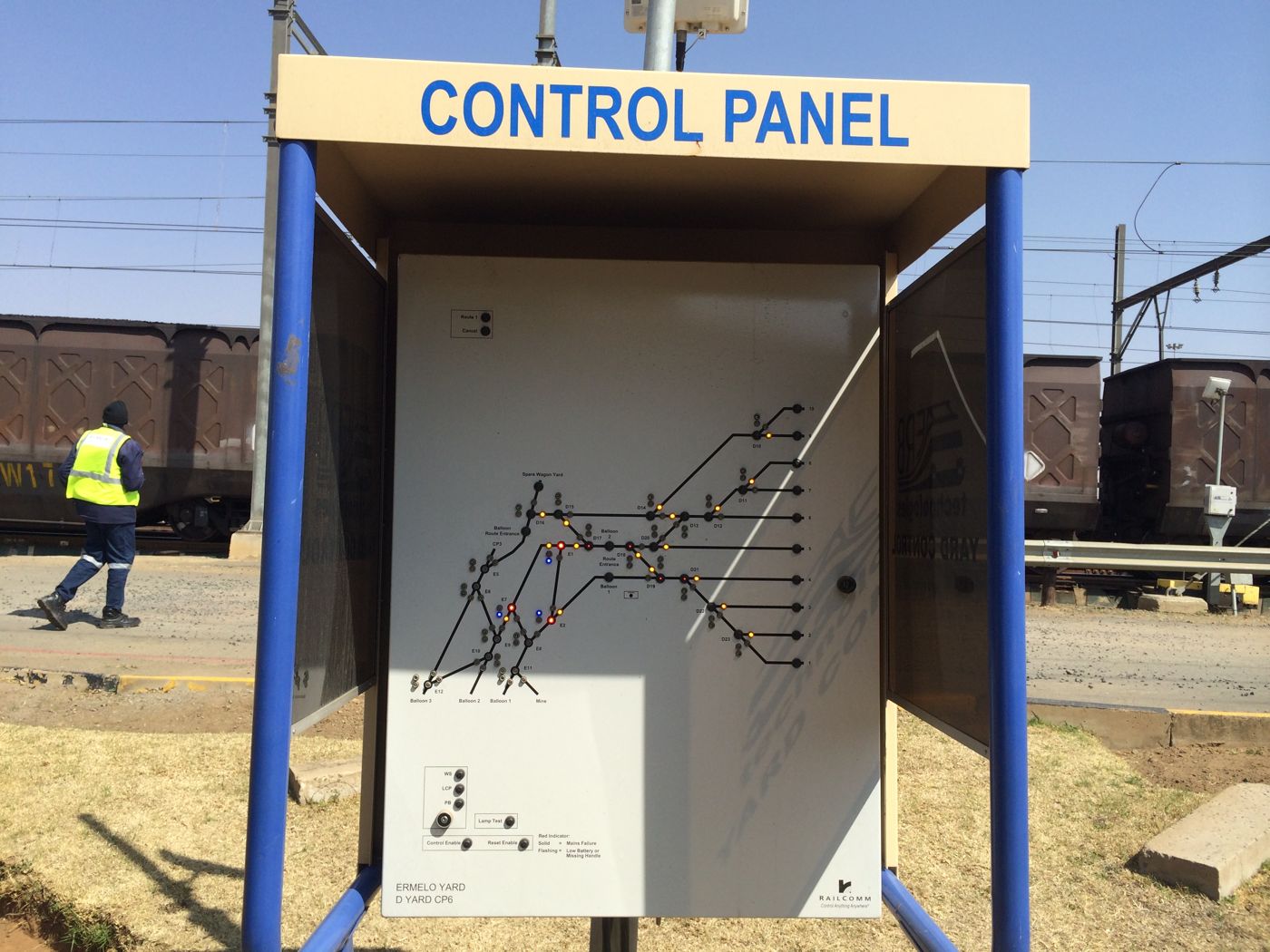
We then documented the current process end to end: a loaded train arriving in D-yard, in-service wagon examination, doubling and shunting at Control Point 6, line allocation by Control Points 7 and 8, the brake test and the request to depart. Along that flow we identified every touch point, who was involved at each one, and the data each team captured today or needed to do the next job. It produced a long list of capture points, such as arrival times, defects found, the number of not-to-go wagons and when the brake test finished, plus requirements for delay reasons, chat, notifications, roles and train history.
The design followed that research and led to three connected channels, each fitted to the people who use it and where they stand in the yard.
One capture per event, at the point it happens. The person who witnesses an arrival, an inspection or a coupling logs it once, on a tablet or phone at their control point, and everyone sees it.
A whole-yard view and a per-train view. The app shows the state of every control point at a glance, and lets anyone open a single train to see its history and where it is heading next.
A countdown, not a log. Trains are shown against time to departure, so the yard can act ahead of a train rather than react to it.
Built for a hard place to work. The interface assumed mobile connections, isolated control points, twelve-hour shifts, and people who would need to see it working before they trusted it.
Workshops & wireframes
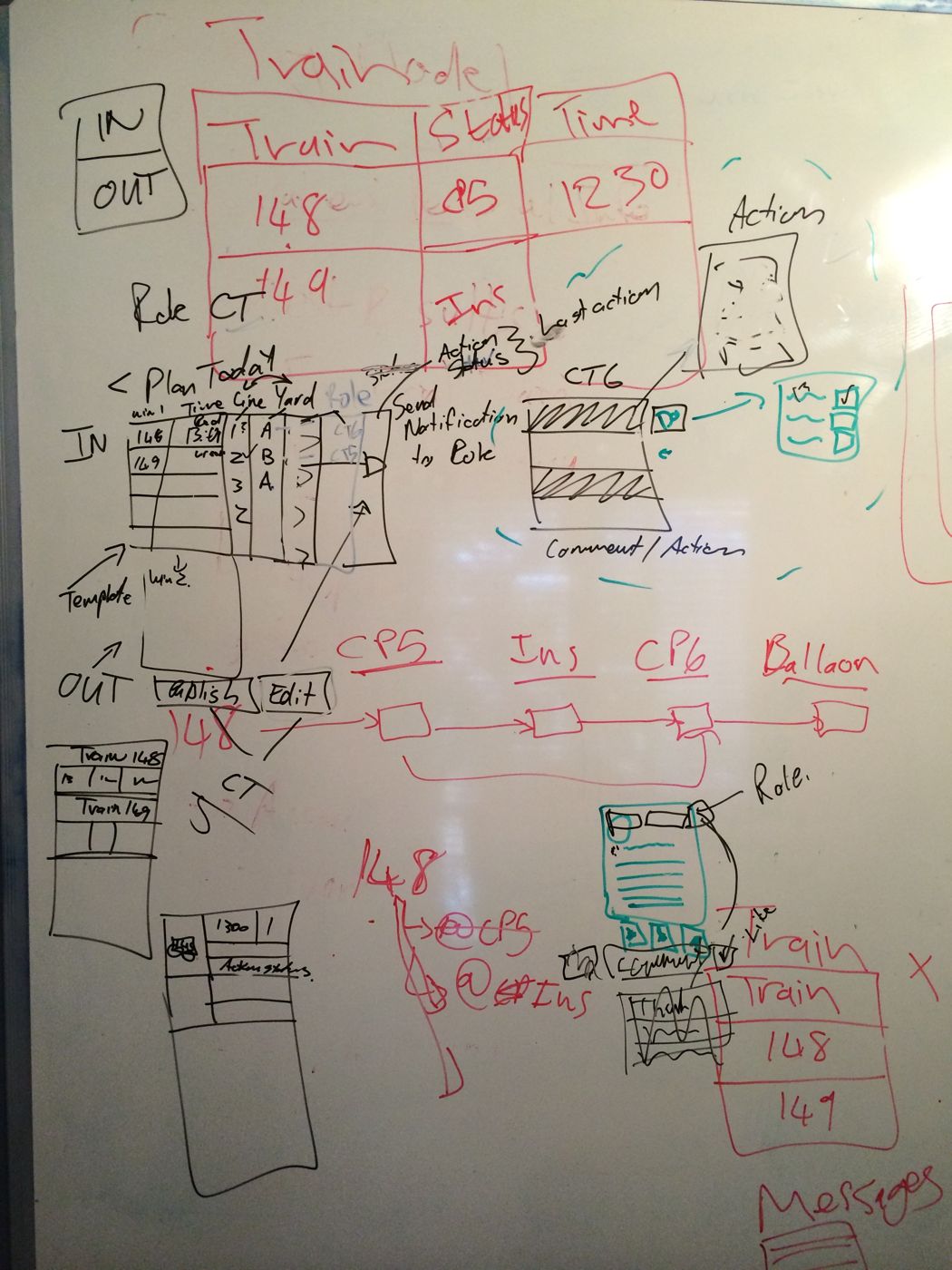
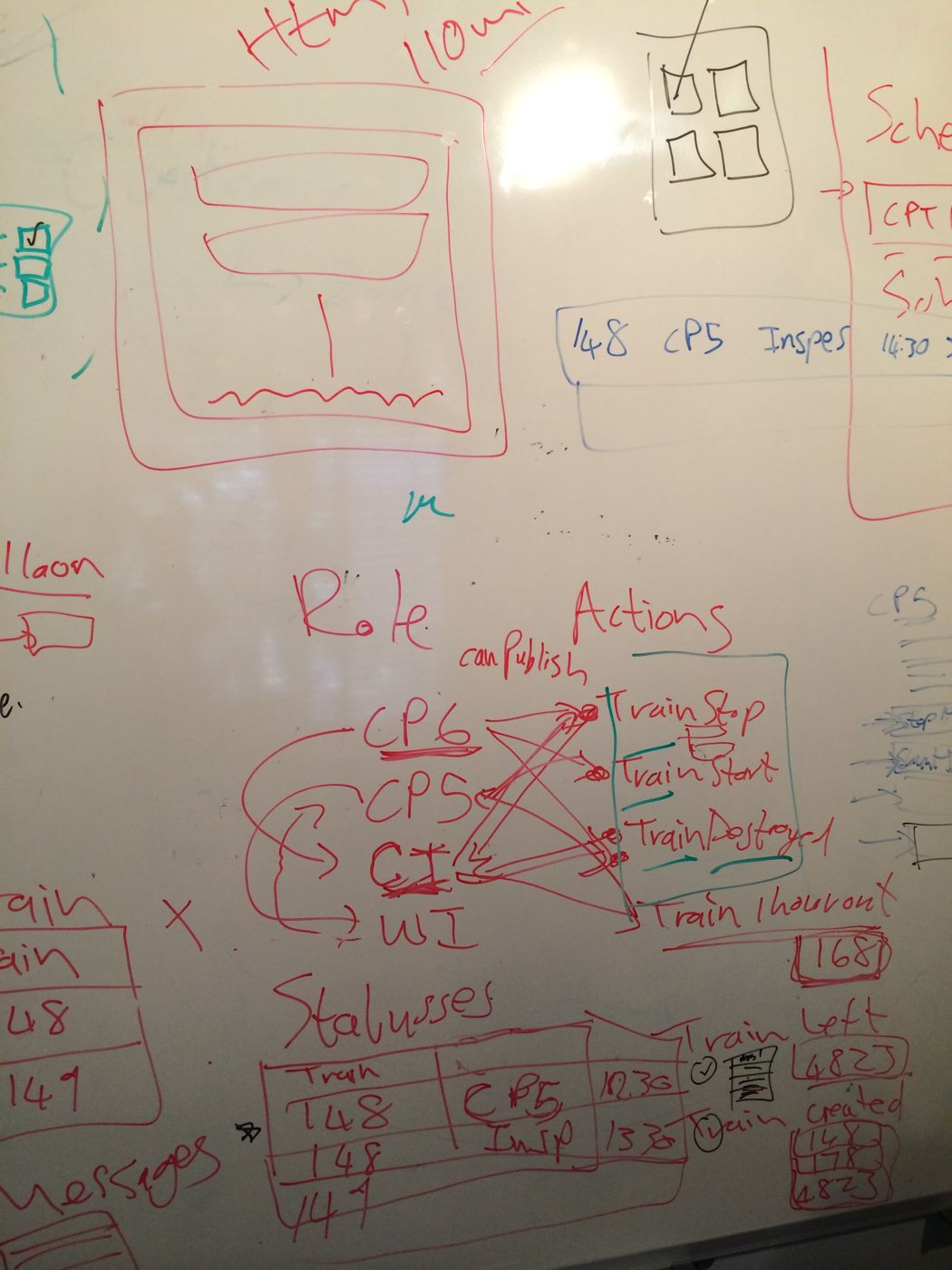
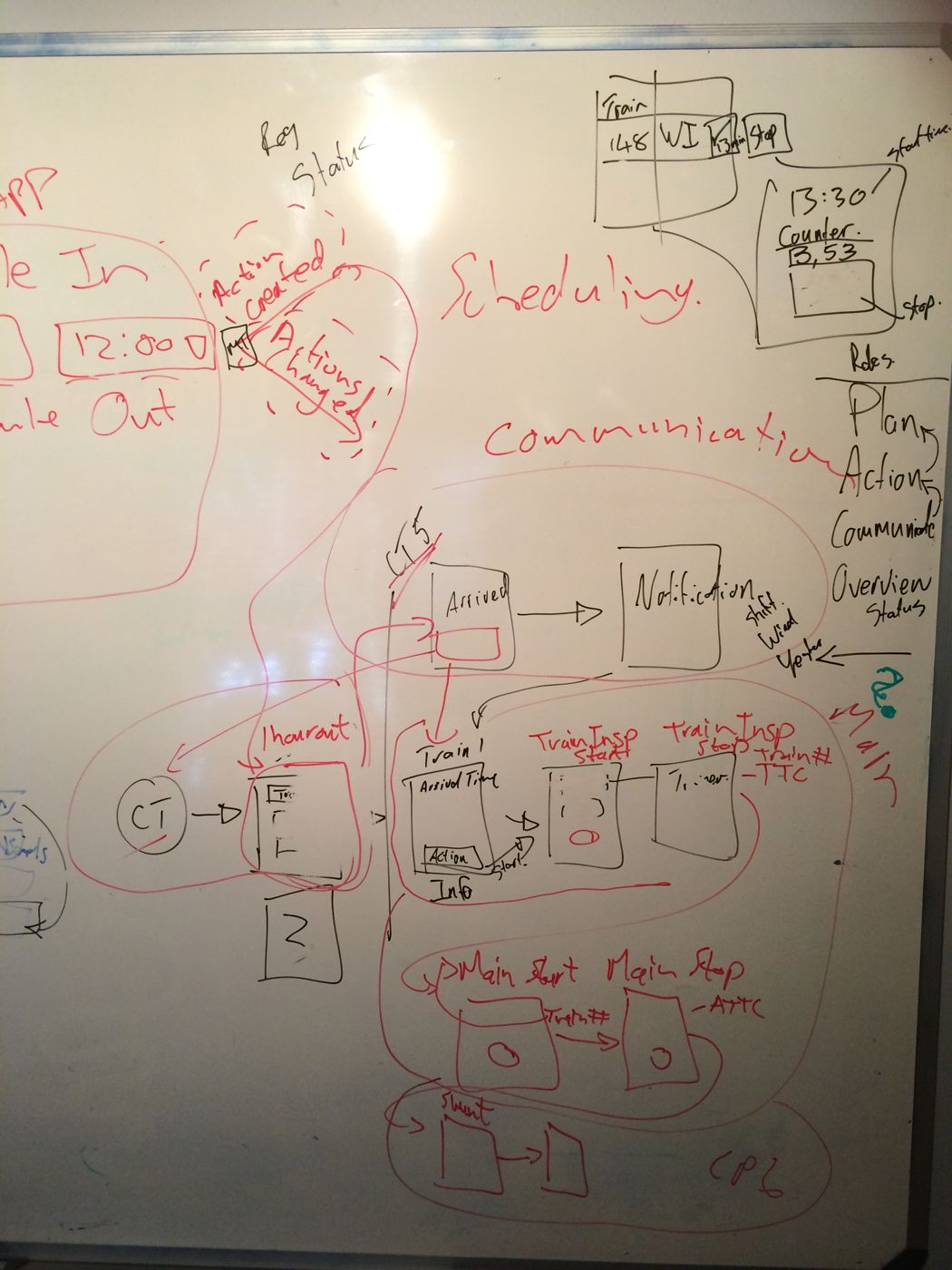
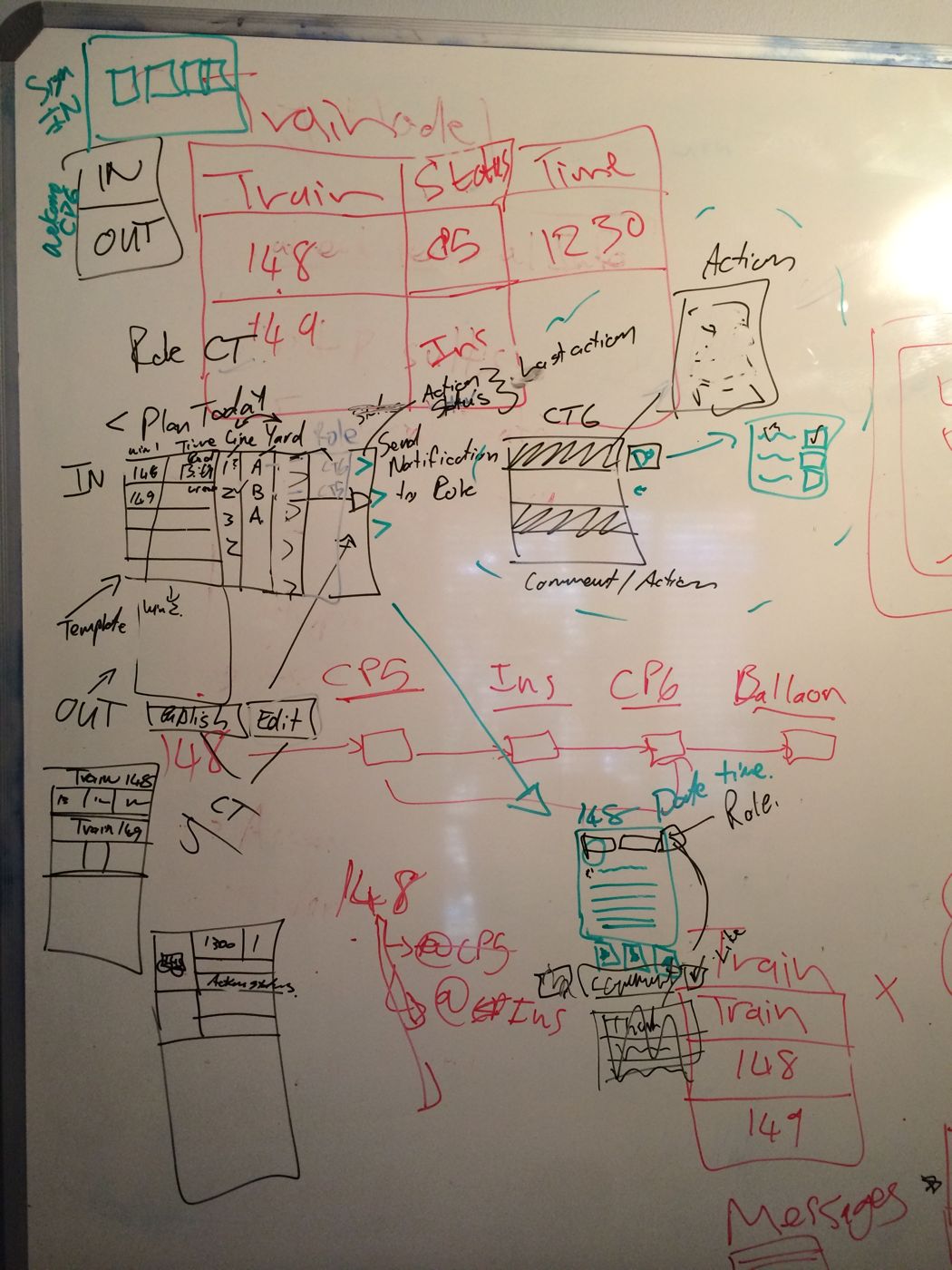
Before any screen was drawn, Origin ran workshops with the client team to agree the shape of the solution. On whiteboards we defined the solution structure and framework, the content that mattered most, the different sections of the app, and the user journeys and flows for each role in the yard. The wireframes for the tablet, mobile and TV screens followed from those sessions.
Working at that level meant disagreements surfaced while they were still cheap to resolve. By the end, everyone had discussed and agreed the way forward, and the wireframes that followed built on decisions the team already owned.
What we shipped
A pilot for the Ermelo loaded cycle, from a train passing the first control point to the completion of wagon examination and departure, delivered as three separate channels that feed one another. The tablet app and the mobile app both capture data, depending on who is using them, and the control-room TV displays it, so the people planning and managing the yard see the same picture as the people working it.
The roadmap extended it across the full loaded cycle and the empty side, towards replacing the log books entirely and connecting to the train management system. Elements of a behaviour model were built in: visible timers so staff could see how long their own tasks took, and recognition for consistent capture.
Tablet · data input
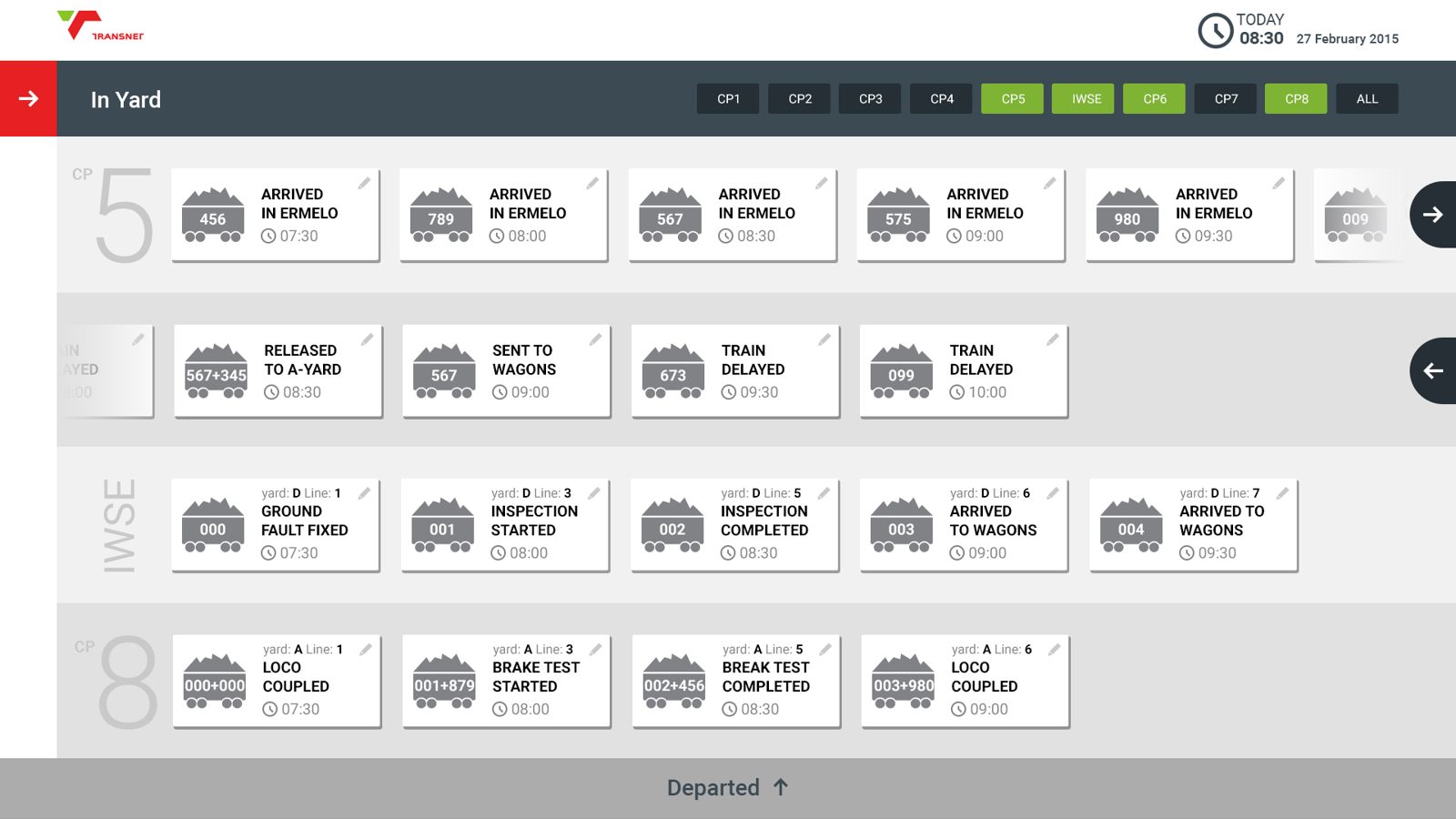
Used at the control points, the tablet app is the main way data enters the system. It shows the yard as a board grouped by control point, with each train a card holding its latest status and time. Staff tap a card to record an update, drag incoming trains onto the control point where they arrive, couple and decouple trains, and open a train's schedule to see its full history. A drawer along the bottom lists departed trains, heading either to Richards Bay or back to the mines.
Mobile · view and data input
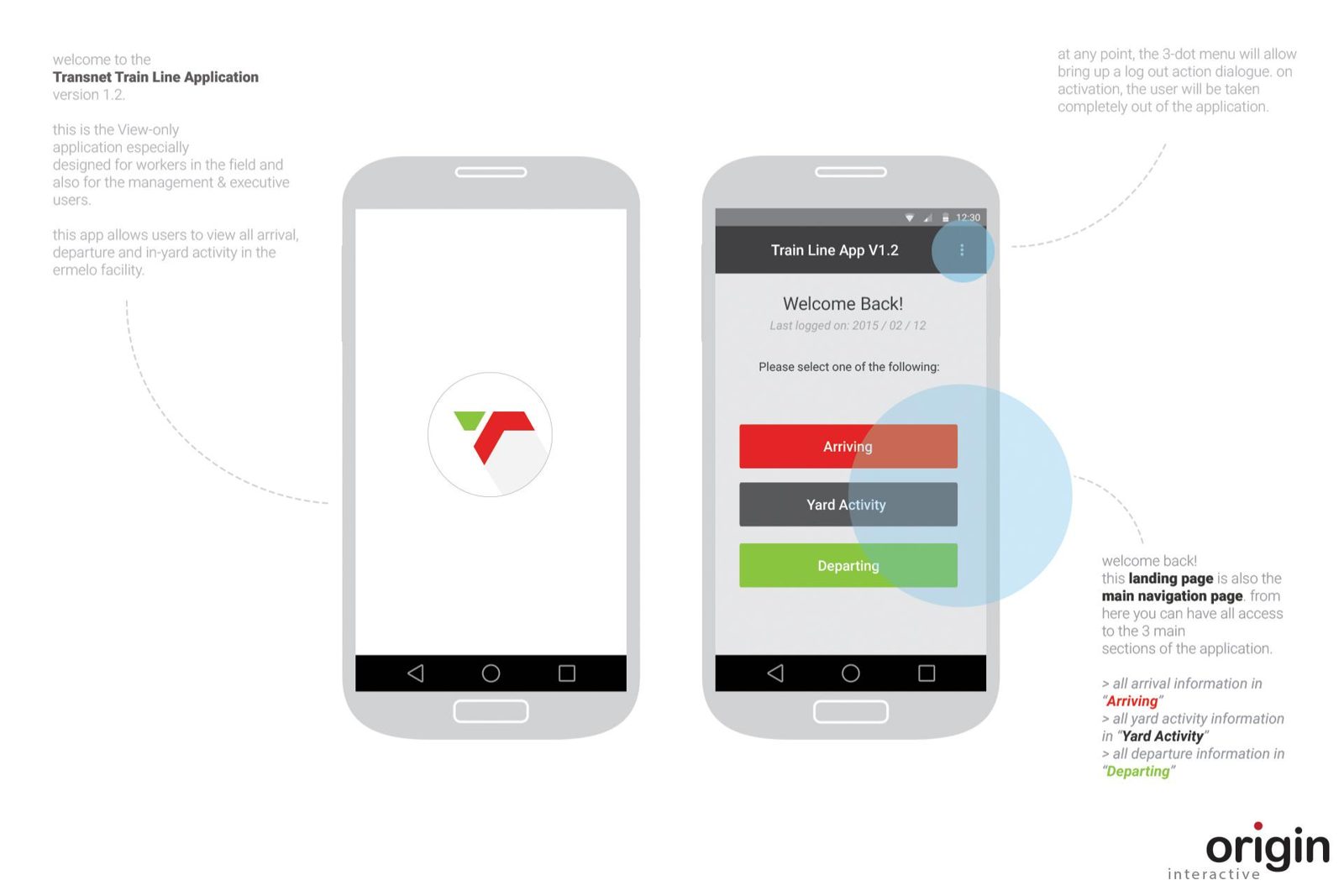
The mobile app comes in different versions depending on the user's profile and permissions. The view-only version is for workers in the field and for managers and executives who need to follow the yard without standing at a control point. It lists every arrival from the mines and from Richards Bay, every departure, and the activity in each yard, with a history for any train or wagon set. The data input version lets permitted users sign in with a code and record events from their phone, such as a train arriving or a delay, add trains, and chat with other control points. We also designed an earlier version of the phone app that explored capturing events and chat from the handset, shown at the end of the set.
TV · control room
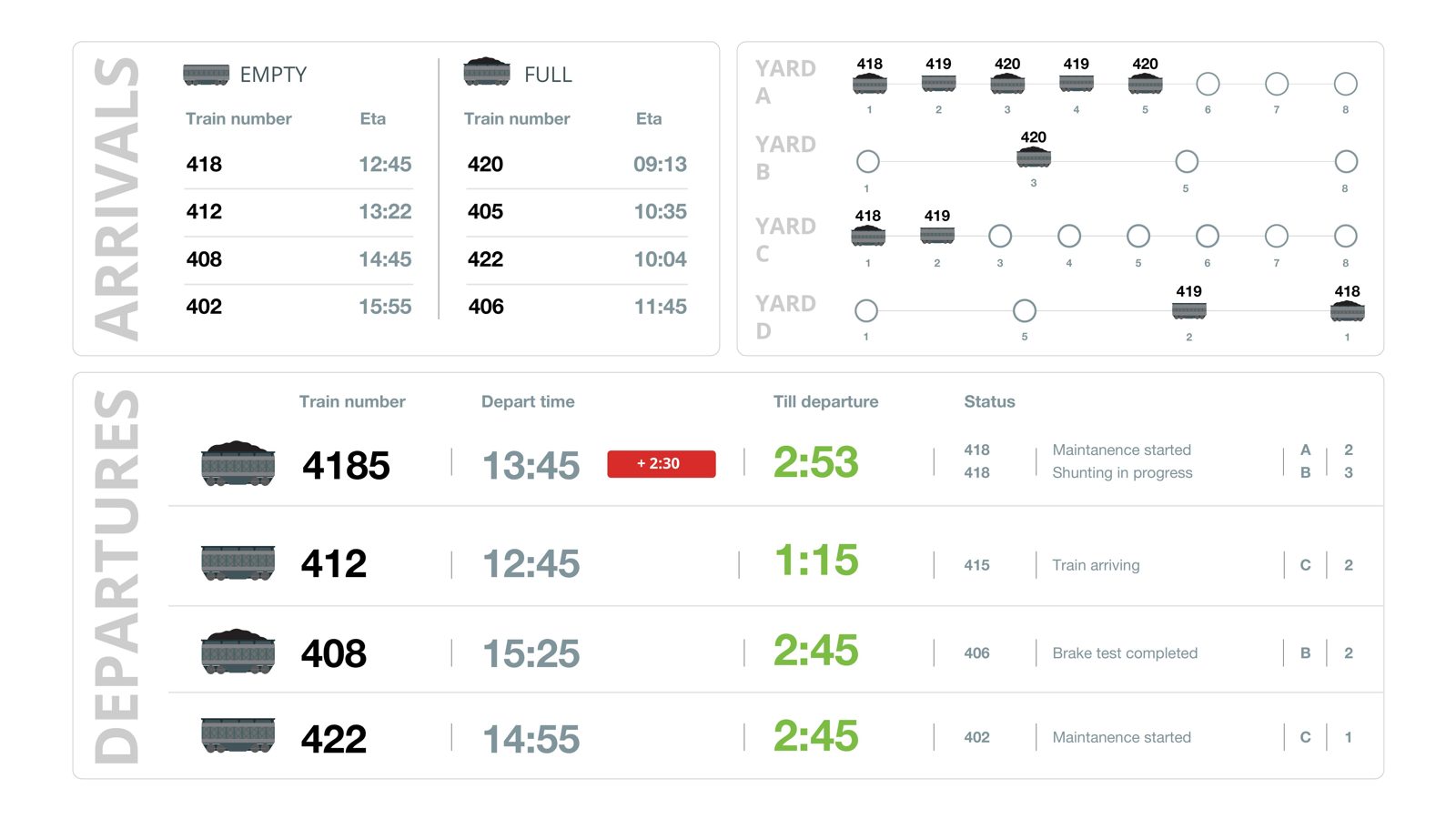
In the control rooms, a large display shows the whole yard at once. Arrivals are split into empty and full trains with their expected times, a map of yards A to D shows which lines are occupied, and a departures list counts down to each train's departure time with delays flagged in red.
Outcome & value
For the first time the Ermelo yard could see itself. A planner knew the moment a train arrived rather than waiting for a call; a control point could prepare for a train that was still an hour away; problem wagons could be flagged so Richards Bay was ready for them. Reaction shifted from after the fact to ahead of time.
Had the yard stayed on whiteboards and radio, coordination would have kept running at walking pace, delays would have kept surfacing one control point too late, and the coal line would have kept losing throughput to problems that were visible to someone, just not to everyone.
In summary

Next steps
Is your operation coordinated by phone calls and whiteboards?
Let's talk about it.
Tell us what you're working on, what you're trying to achieve, what isn't working, or where you think there's an opportunity.